
Golfing with Macular Degeneration: High-Contrast Tint Solutions for Sunny South Florida Greens
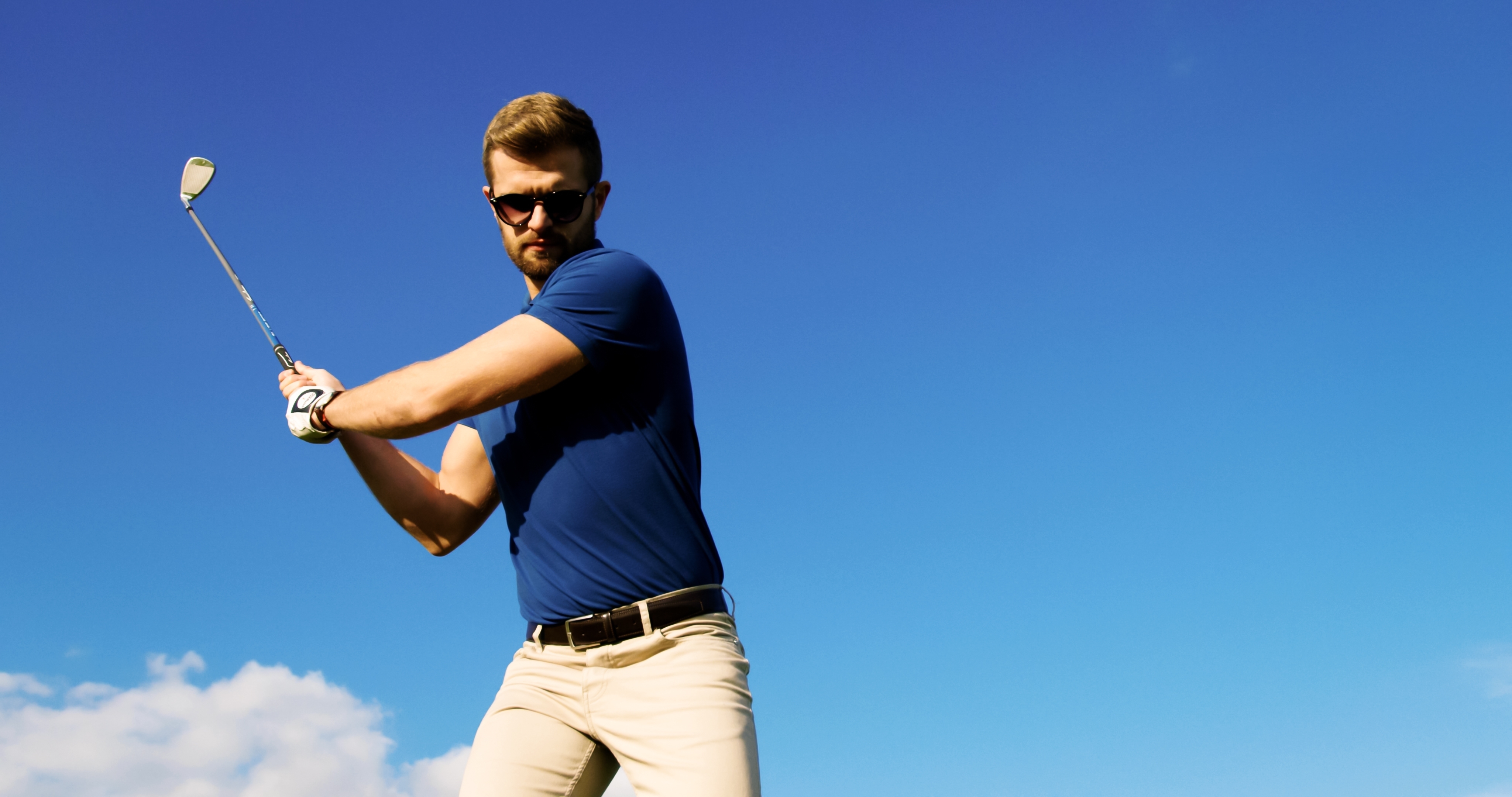
Golf demands more from your vision than simply seeing the ball clearly. Following a shot against a bright South Florida sky, reading the contours of a green, judging distance, and moving between sunny and shaded areas all depend on contrast and glare control.
For golfers living with macular degeneration, these tasks can become more challenging. At Eye-Site of Boynton Beach, we help patients maximize their usable vision and choose eyewear suited to their daily activities. The right lens tint or glare-reducing option may make time on the course more visually comfortable.
Why Does Macular Degeneration Affect Golf?
Age-related macular degeneration, or AMD, affects the macula, the part of the retina responsible for detailed central vision. Depending on the stage of the condition, patients may notice blurred central vision, reduced contrast, distortion, or difficulty recognizing fine details.
On a golf course, reduced contrast sensitivity can make it harder to distinguish a white ball from clouds, identify subtle changes across the green, or see clearly when lighting changes.
Bright South Florida sunshine can add another problem - glare.
How Can High-Contrast Tints Help?
Tinted lenses cannot restore retinal cells or treat the underlying macular degeneration. Their purpose is to make the remaining vision more functional by controlling glare and changing how contrast appears.
Depending on your eyes and visual preferences, options worth discussing may include:
Amber or yellow filters: May improve perceived contrast for some people with low vision
Gray lenses: Reduce overall brightness while maintaining relatively natural color perception
Polarized lenses: Reduce reflected glare from pavement, water, golf carts, and other horizontal surfaces
Anti-reflective treatments: Help reduce distracting reflections from the lens surfaces
UV400 protection: Blocks ultraviolet radiation and is important for outdoor eye protection
Wraparound frames: Provide additional protection from bright peripheral sunlight
There is no single tint that works best for every Boynton Beach golfer. Trying different options can help determine which filter provides the most useful balance of brightness, contrast, and color.
Is a Darker Lens Always Better?
No. Very dark lenses may reduce glare, but they also reduce the overall amount of visible light reaching the eyes.
For someone with reduced contrast sensitivity, an excessively dark lens can sometimes make shaded areas or low-contrast objects even harder to see. Golfers frequently move between direct sunlight, trees, shaded cart paths, and changing cloud cover, so lens darkness needs to match the environment.
This is why choosing sunglasses based only on how dark they look may not provide the best visual performance.
Why Polarization Can Help on South Florida Courses
South Florida golfers encounter plenty of reflected light. Sunlight can bounce from water hazards, pavement, golf carts, and other bright surfaces.
Polarized lenses reduce certain types of reflected glare and may improve outdoor visual comfort. However, polarization and tint color are separate features. A polarized lens can still be made in different colors and levels of darkness.
Your prescription also matters. The best sun lens will not compensate for an outdated prescription or another untreated eye problem.
Keep Macular Degeneration Monitored
Specialty eyewear can help you function more comfortably, but it does not slow or reverse AMD itself. Regular eye examinations remain essential for monitoring the retina and identifying changes that may require additional care.
New distortion, a new dark or missing area in your central vision, or a sudden decrease in vision should be evaluated promptly rather than attributed to lighting conditions.
At Eye-Site of Boynton Beach, our doctors diagnose and manage macular degeneration and can also work with our optical team to consider eyewear based on your prescription, visual limitations, and lifestyle.
If macular degeneration or glare is making it harder to enjoy sunny South Florida golf, schedule an eye exam with Eye-Site of Boynton Beach at 6641 W Boynton Beach Blvd, Boynton Beach, FL 33437 by calling (561) 738-0111. We can evaluate your eye health and help you explore lens options designed to improve contrast, control glare, and make the most of your remaining vision on and off the course.


Contact Info
Hours of Operation
- Monday 9:00 am - 5:00 pm
- Tuesday 11:00 am - 7:00 pm
- Wednesday 11:00 am - 7:00 pm
- Thursday 11:00 am - 7:00 pm
- Friday 9:00 am - 5:00 pm
- Saturday Closed
- Sunday Closed
Closed from 1:00 pm–2:00 pm for lunch daily
© 2026 Eye-Site of Boynton Beach. All rights Reserved. Accessibility Statement - Privacy Policy - Terms and Conditions - Sitemap
Powered by:
